August 4, 2026
Driving down the highway should be a smooth experience. However, that tranquility is shattered when you press the brake pedal and suddenly feel the steering wheel vibrating in your hands. This shaking sensation is alarming, acting as a clear warning sign from your vehicle that something is malfunctioning. When your steering wheel shudders under braking, it drastically reduces your control over the vehicle and increases the distance required to come to a safe stop. Ignoring this problem will lead to more severe damage and compromise your safety on the road. The root causes of this common automotive issue can range from minor wear and tear to significant component failure. Regardless of the exact cause, experiencing these vibrations means it is time to visit a reliable auto repair shop to restore your vehicle's safety.
Understanding Warped Brake Rotors
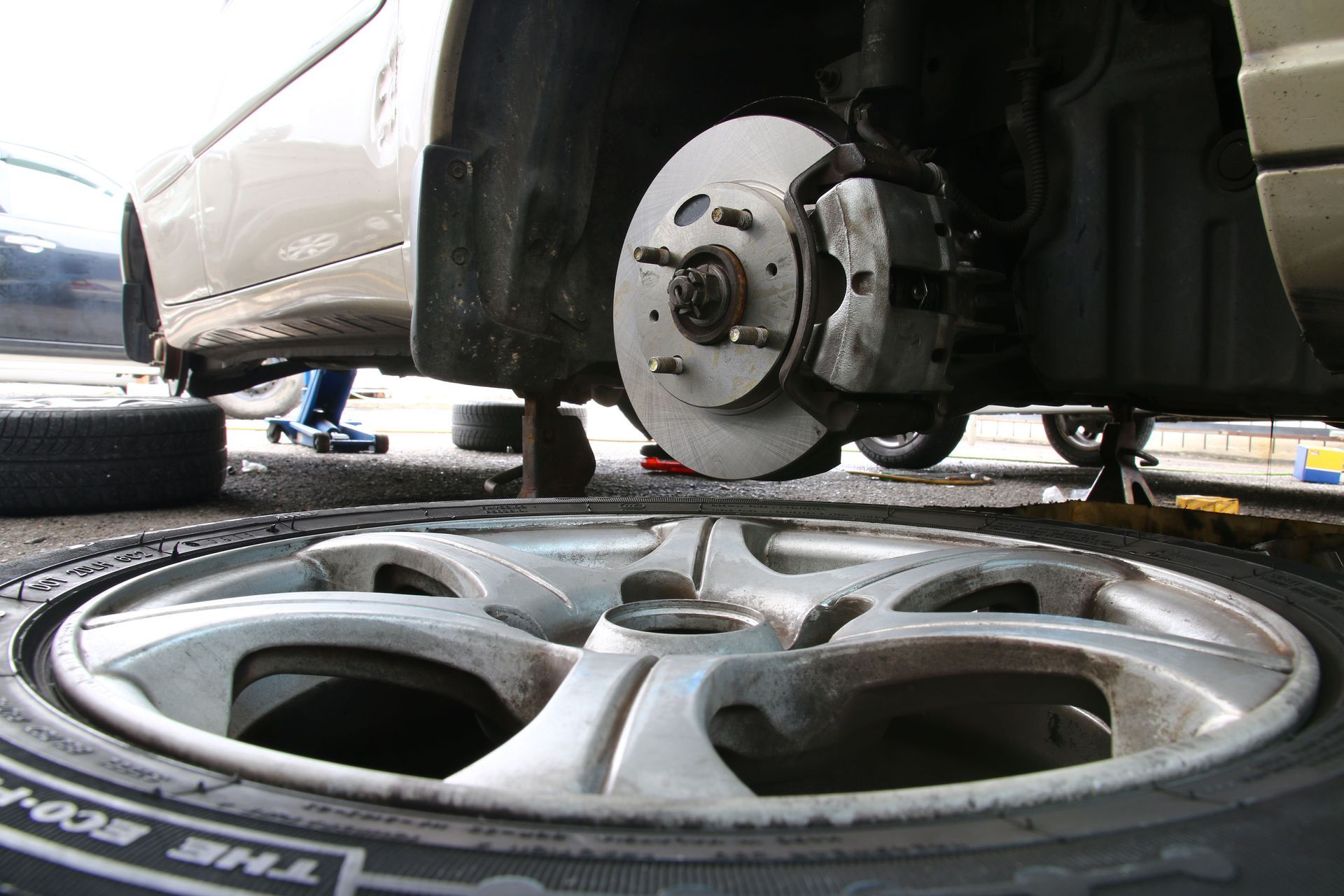
The most frequent culprit behind a shaking steering wheel during braking is a warped brake rotor. Your vehicle's brake rotors are the large, flat metal discs that sit behind the wheels. When you press the pedal, the brake pads clamp down onto these rotors to generate the friction needed to stop the vehicle. Over time, the extreme heat generated by this continuous friction can cause the metal of the rotors to warp or become unevenly worn across the surface. When the rotor surface is no longer flat, the brake pads skip and bounce against the uneven metal. This rapid bouncing translates directly into a violent pulsation that travels up the steering column and into your hands. If you feel a rhythmic thumping alongside the shaking, warped rotors are highly likely the issue. Addressing this promptly at your local auto repair shop ensures your vehicle stops efficiently without shaking your hands off the wheel.
Identifying Worn Brake Pads
Alongside the rotors, your brake pads are the primary components responsible for safely stopping your car. These pads are coated with a specialized friction material that presses heavily against the metal rotors. With every stop you make, a minuscule amount of this friction material is scraped away. According to AAA, brake pads last roughly between 30,000 and 80,000 miles. Once the friction material wears down beyond a certain point, the metal backing of the pad can begin to scrape against the rotor. This uneven application of force can cause the front end of the vehicle, including the steering wheel, to shudder and vibrate when stopping. Replacing worn pads is a fundamental aspect of routine automotive maintenance. Delaying this necessary visit to an auto repair shop can ruin your rotors, transforming a relatively simple fix into a much more extensive mechanical overhaul that keeps your car off the road.
Spotting Sticking Brake Calipers
The brake caliper is the crucial mechanism that houses the brake pads and forces them against the rotor when you press the pedal. It operates using highly pressurized hydraulic brake fluid. Occasionally, the pistons inside the brake caliper or the slide pins that allow the caliper to move can become stuck due to rust, corrosion, or accumulated road grime. When a caliper sticks, it might continuously apply pressure to the rotor even when your foot is entirely off the pedal, or fail to apply pressure evenly when you try to come to a halt. This uneven clamping force drags the vehicle to one side and causes vibrations to travel through the steering system. A sticking caliper generates localized heat, which can warp a new rotor and rapidly degrade your brake pads. If you notice a burning smell alongside the steering wheel shake, a seized caliper is often to blame. Taking your car to an auto repair shop is essential to unbind the caliper, re-lubricate parts, or replace the unit.
Inspecting Suspension Components
While the braking system is usually the primary suspect, a shaking steering wheel can sometimes stem from underlying issues within your vehicle's suspension system. The suspension is a complex network of parts designed to connect the vehicle frame to its wheels. Components such as tie rods, ball joints, control arms, and bushings endure immense stress every time you drive over bumps or make sharp turns. When these parts become loose or severely worn out over the years, they lose their crucial ability to hold the wheels tightly in proper alignment. When you step on the brakes, the sudden shift in the vehicle's weight and the massive deceleration forces can cause these loose suspension parts to forcefully shift out of their intended place. This erratic shifting amplifies minor road vibrations, resulting in a steering wheel that shakes heavily. Resolving this requires a seasoned eye. An experienced mechanic at an auto repair shop must examine the undercarriage to identify and swap out the degraded parts.
Evaluating Tire and Wheel Alignment
Your tires are the physical point of contact between your vehicle and the pavement below, making their overall condition critical to the smoothness of your daily ride. If your tires are improperly balanced, slightly out of round, or suffering from uneven tread wear, they cause persistent vibrations at various cruising speeds. Quite often, these tire-related vibrations are significantly magnified when you apply the brakes to slow down. Similarly, if your wheel alignment is significantly off, the tires are essentially fighting against each other and dragging across the pavement. This excessive dragging creates deep instability that becomes highly apparent when you attempt to decelerate. While you might initially suspect you have a severe mechanical failure, the true solution could simply be adjusting your wheel positioning to restore vehicle stability.
Checking Wheel Bearings for Wear
Wheel bearings are essential steel balls or rollers encased in a durable metal ring, specifically designed to allow your vehicle's wheels to spin freely with minimal physical friction. These bearings support the entire weight of the vehicle while constantly enduring the harsh rotational forces of daily driving. Over tens of thousands of miles, the vital lubricating grease inside the wheel bearings can break down, or the protective seals can fail, allowing damaging dirt and moisture to enter the assembly. When a wheel bearing begins to fail, it creates dangerous looseness in the wheel hub assembly. Under normal cruising conditions, you might hear a low hum or grinding noise. However, when you apply the brakes, the clamping force of the calipers grabs onto a rotor that is no longer spinning on a stable axis. This instability causes the entire wheel assembly to wobble, sending severe vibrations directly up the steering column.
Experiencing a shuddering or vibrating steering wheel every time you press down on the pedal is a stressful and potentially dangerous situation that no driver should ignore. As discussed throughout this article, this alarming symptom can originate from several mechanical issues, ranging from easily fixable warped rotors and depleted pads to complex problems involving sticking calipers, loose suspension joints, failing wheel bearings, or imbalanced tires. Because the exact cause can be deeply hidden within the wheel assembly, it requires careful inspection to resolve completely. Ignoring these vital warning signs will lead to a much longer stopping distance, decreased vehicle control, and higher maintenance costs down the road. Proper maintenance is the key to vehicle longevity. Addressing the issue early ensures a minor replacement does not snowball into massive mechanical failure. If your commute is being disrupted by a shaking steering column, it is imperative to have the experts at a professional
auto repair shop perform inspections to keep you safe. For reliable vehicle care and peace of mind on the road, bring your vehicle to General Auto Repair.